Understanding the U.S. government can feel confusing at first. You may hear about Congress, the president, the Supreme Court, and state governments—but what does each one actually do?
The United States has a system designed to divide power between different branches and levels of government. This guide explains the basics in plain English and shows you where to find reliable information about U.S. laws and government services.
What Is the U.S. Government?
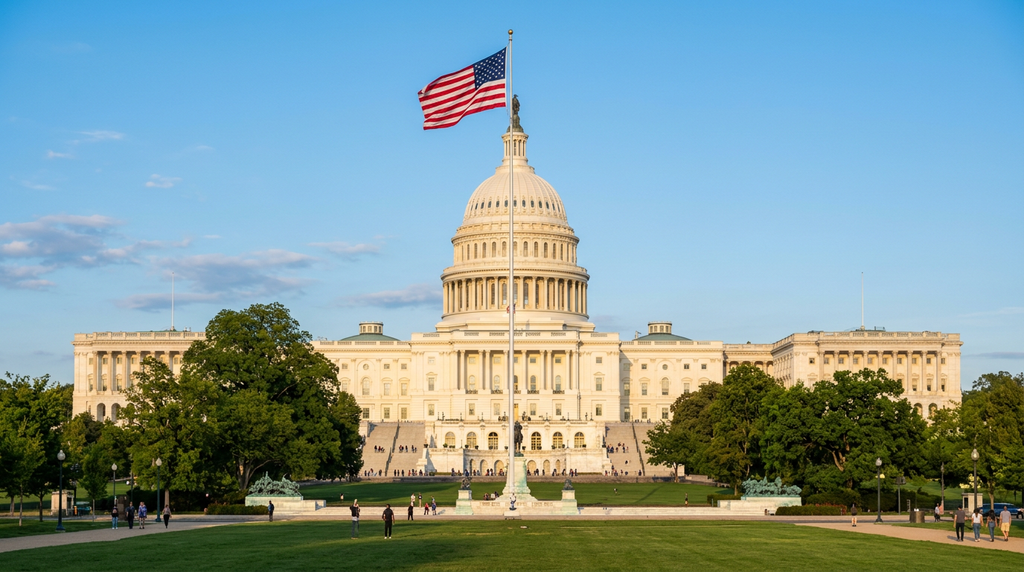
The U.S. government is the system responsible for governing the United States and carrying out its laws. The U.S. Constitution is the country’s foundational legal document. It establishes the federal government’s structure and sets out important rights and principles.
Government in the United States operates at more than one level. The federal government handles national matters, while state and local governments have responsibilities within their own areas.
For a starting point, visit USA.gov’s guide to the U.S. government.
What Are the Three Branches of the U.S. Government?
The Constitution divides the federal government into three branches: legislative, executive, and judicial. Each has different responsibilities, and each can limit some actions of the others through a system called checks and balances. Learn more about the three branches.
1. The Legislative Branch: Congress
Congress is the federal government’s lawmaking branch. It has two chambers:
- The Senate
- The House of Representatives
Members of Congress introduce and debate bills, which are proposals for new laws or changes to existing laws. Both chambers generally must agree on the same bill before it goes to the president.
Congress also has other responsibilities, including deciding how federal money is appropriated and overseeing parts of the federal government.
2. The Executive Branch: The President and Federal Agencies
The executive branch is led by the president. It is responsible for carrying out and enforcing federal laws.
The vice president, Cabinet, and federal departments and agencies are also part of the executive branch. Agencies handle specific responsibilities—for example, the Internal Revenue Service, or IRS, administers federal tax laws.
The president can sign a bill passed by Congress into law or veto it. Congress may override a veto with the required votes.
3. The Judicial Branch: Federal Courts
The judicial branch includes the U.S. Supreme Court and other federal courts. Courts interpret laws and apply them to cases.
Federal courts can also decide whether a law or government action conflicts with the Constitution. The Supreme Court is the highest court in the federal judicial system.
Federal, State, and Local Government: What’s the Difference?
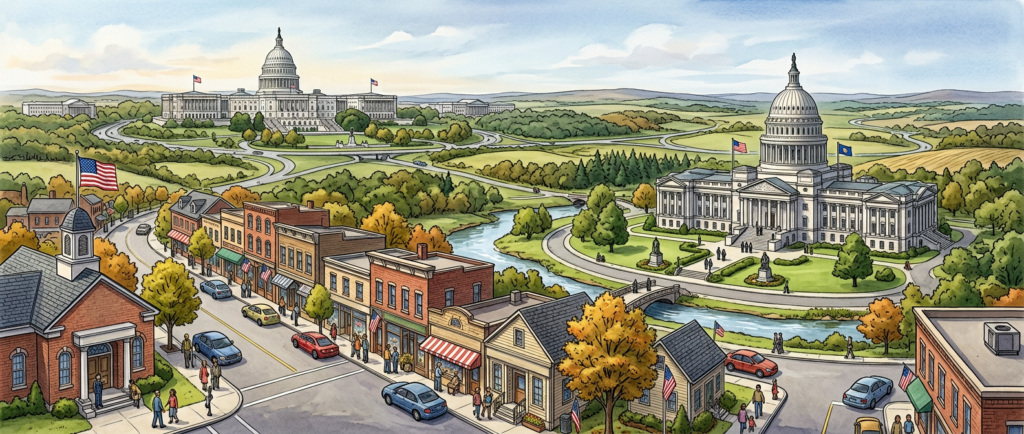
The three branches describe how the federal government is organized. Separately, government responsibilities are also divided between federal, state, and local levels.
Federal Government
The federal government operates nationwide. Its responsibilities include matters such as national defense, immigration, and federal taxation.
State Governments
Each of the 50 states has its own government and laws. States handle many matters that affect daily life, including areas such as driver licensing and education.
This is why rules can differ depending on where you live. For example, state tax requirements and driving rules are not necessarily identical across the country.
Local Governments
Local governments can include counties, cities, and towns. Depending on the location, they may be responsible for services such as local roads, zoning, and public safety.
For an introduction to federal taxes, read our article: How U.S. Federal Income Tax Works: A Beginner’s Guide.
You can find state and local government contacts through USA.gov’s government directory.

How Are Federal Laws Made?
A federal law usually starts as a bill—a proposal for a new law or a change to an existing one.
Here is a simplified version of the process:
- A member of Congress introduces a bill.
- Congressional committees may review and revise it.
- The House and Senate consider the bill and must generally pass the same version.
- The bill goes to the president.
- The president may sign it or veto it. Congress can override a veto with the required votes.
There are additional rules and exceptions, so this is only an overview. For more detail, see USA.gov’s explanation of how laws are made.
What Types of Rules Affect Everyday Life?
People in the United States may need to follow federal, state, and local laws at the same time. The rules that apply depend on the situation and location.
Common examples include:
- Taxes: Federal and state tax obligations vary based on personal circumstances.
- Driving: Licensing and traffic rules are largely handled at the state and local levels.
- Employment: Federal, state, and sometimes local laws can affect wages and workplace protections.
- Housing: Rental and property rules can differ by state and locality.
- Voting: Eligibility and procedures depend on the election and applicable federal and state laws.
For example, USA.gov’s minimum wage guide explains that federal, state, and local wage rates can differ. Not every rule applies in the same way to every worker, so check the details for your situation.
Where Can You Find Reliable U.S. Government Information?
For important decisions, start with an official government source rather than relying only on social media or an unfamiliar website.
Useful starting points include:
- USA.gov — General government information and services.
- Congress.gov — Federal bills and legislative information.
- IRS.gov — Federal tax information.
- USCIS.gov — Immigration and citizenship information.
For state-specific questions, look for your state government’s official website or contact the relevant state agency.
Frequently Asked Questions
What are the three branches of the U.S. government?
The three branches are the legislative branch, which makes federal laws; the executive branch, which carries them out; and the judicial branch, which interprets and applies laws in cases.
Are U.S. laws the same in every state?
No. Federal laws apply across the United States, but state and local laws can differ. The rules that apply to you depend on the issue and where you live.
Does the president make laws alone?
No. Congress passes federal legislation, and the president generally decides whether to sign or veto a bill. The president also has other powers, including issuing executive orders, but those are not the same as laws passed by Congress.
Where can I check an official federal law?
You can begin with USA.gov’s federal laws and regulations page, which explains how to research federal laws and legislation.
Final Thoughts
The U.S. government may seem complicated, but the basic idea is straightforward: power is divided among three federal branches and across federal, state, and local governments.
If you are researching a specific rule, check both the relevant federal source and the rules in your state. Laws and requirements can change, and the right answer often depends on your circumstances.
This article is for general educational purposes and is not legal, tax, or financial advice. For guidance about your situation, consult the relevant government agency or a qualified professional.
Internal links — jab next articles publish ho jaayein
Abhi aapki first post hai, isliye existing internal links nahi hain. Broken links banane ke bajaye, baad mein in anchor texts ko related published articles se link kar dena:
- How federal taxes work in the United States → future U.S. taxes article
- Understanding state and local laws → future state laws article
- How to find official government benefits → future benefits article
Agle article ke liye USA finance topic bhi rakh sakte hain, jaise “How U.S. Federal Income Tax Works for Beginners.”